

Introduction
The Coppock Curve Indicator, developed by economist Edwin Coppock in 1962, is a long-term momentum indicator primarily used to identify major buying opportunities in stock markets. Originally designed for the U.S. equity market, it was intended to help investors spot long-term entry points rather than short-term trades. The Coppock Curve is particularly popular among institutional investors and analysts because of its ability to highlight cyclical bottoms in markets.
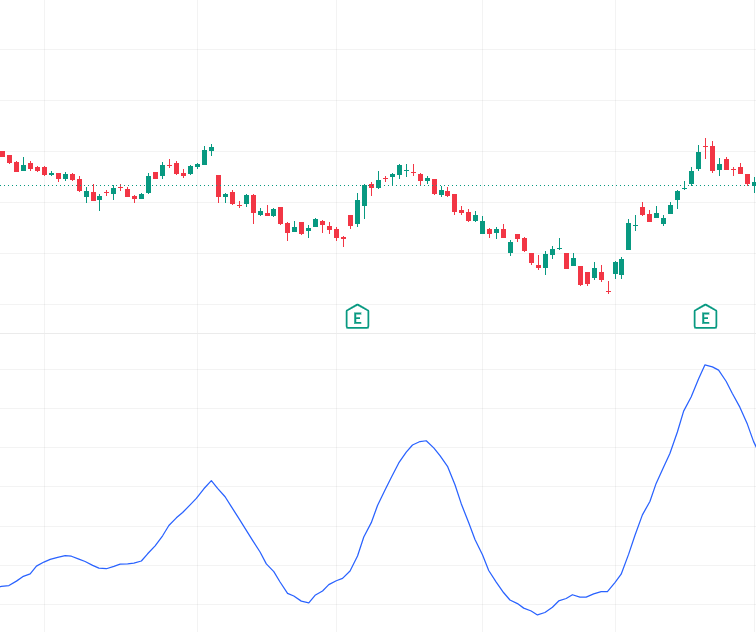
Structure of the Coppock Curve
The Coppock Curve is calculated using:
- Rate of Change (ROC): Measures percentage change in price over a given period.
- Weighted Moving Average (WMA): Smooths the ROC values to reduce noise.
- Formula:
[ Coppock\ Curve = WMA(ROC_{14} + ROC_{11}, 10) ]
- ROC(14) = 14-month rate of change
- ROC(11) = 11-month rate of change
- WMA(10) = 10-period weighted moving average of the sum
This structure ensures the Coppock Curve focuses on long-term momentum shifts rather than short-term fluctuations.
Key Features
- Long-Term Focus: Designed for monthly charts, making it ideal for investors rather than day traders.
- Buy Signal Tool: Traditionally used to identify major bottoms in equity markets.
- Smooth Curve: Reduces noise by applying weighted moving averages.
- Non-Directional: Primarily signals buying opportunities, not selling.
- Reliable History: Has been used for decades in institutional market analysis.
How It Helps Traders
- Identifying Market Bottoms: A rising Coppock Curve after being below zero often signals a long-term buying opportunity.
- Portfolio Positioning: Helps investors increase equity exposure during early stages of bull markets.
- Risk Management: Reduces false signals by focusing on long-term momentum rather than short-term volatility.
- Trend Confirmation: Confirms whether a market recovery is gaining strength.
- Investor Discipline: Provides objective, rule-based signals that reduce emotional decision-making.
Conclusion
The Coppock Curve is a long-term momentum indicator that remains highly relevant for investors seeking to identify major buying opportunities in equity markets. Its unique structure—combining rate of change with weighted moving averages—makes it reliable for spotting cyclical bottoms and guiding portfolio allocation. While it is not designed for short-term trading or sell signals, when used alongside other trend-following tools, the Coppock Curve enhances confidence in long-term investment decisions. For traders and investors aiming to capture the early stages of bull markets, the Coppock Curve offers a disciplined and historically proven framework.
