

Introduction
The Kairi Indicator is one of the earliest Japanese technical analysis tools, developed before the more widely known Ichimoku system. The word Kairi translates to “disparity” or “difference,” and the indicator measures the deviation of the current price from its moving average. In essence, it helps traders identify whether prices are overextended above or below their average, signaling potential reversals or corrections. Though less commonly used today, the Kairi Indicator remains a valuable tool for understanding market sentiment and price equilibrium.
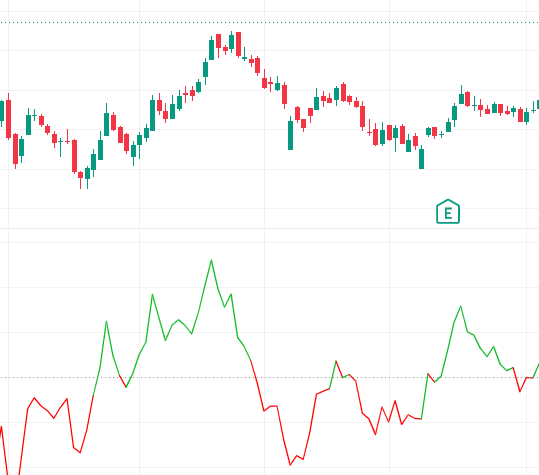
Structure of the Kairi Indicator
The formula for the Kairi Indicator is:
[ Kairi = {(Current Price – Moving Average)}{Moving Average} * 100 ]
- Current Price = Closing price of the period
- Moving Average = Typically a simple moving average (SMA) over a chosen timeframe
- Kairi Value = Expressed as a percentage deviation from the moving average
This structure makes it easy to spot when prices are unusually far from their average, often preceding a correction.
Key Features
- Deviation Measurement: Quantifies how far price has moved away from its average.
- Overbought/Oversold Signals: Large positive values suggest overbought conditions, while large negative values suggest oversold conditions.
- Simplicity: Easy to calculate and interpret.
- Versatility: Works across multiple timeframes and asset classes.
- Historical Significance: One of the earliest Japanese indicators, forming the foundation for later tools like Ichimoku.
How It Helps Traders
- Reversal Detection: Identifies when prices are stretched too far from their average, signaling potential corrections.
- Entry & Exit Points: Helps traders time entries during oversold conditions and exits during overbought conditions.
- Risk Management: Prevents chasing prices that are already overextended.
- Trend Confirmation: Confirms whether price movements are sustainable or likely to revert.
- Strategy Integration: Works well with oscillators like RSI or MACD for layered confirmation.
Conclusion
The Kairi Indicator is a classic Japanese technical tool that measures price disparity from its moving average. Its ability to highlight overbought and oversold conditions makes it useful for anticipating corrections and reversals. While modern traders often prefer advanced oscillators, Kairi remains a simple, effective way to gauge market sentiment. When combined with trend-following or momentum indicators, it enhances accuracy and confidence. For traders seeking a historical yet practical method to understand price equilibrium, the Kairi Indicator offers a structured framework to navigate bullish and bearish markets effectively.
