

Introduction
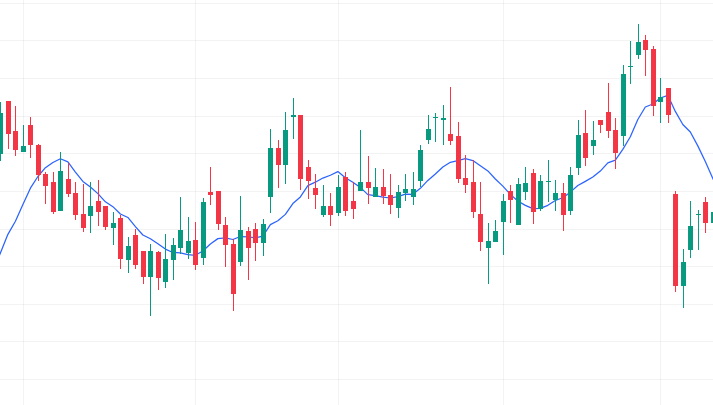
Technical Analysis The 10DMA Crossover is a short-term moving average crossover strategy based on the 10-Day Moving Average (10DMA). This indicator is widely used by traders to identify short-term trend changes, momentum shifts, and potential entry or exit points in financial markets. The “DMA” stands for Daily Moving Average, and the 10DMA specifically tracks the average closing price of an asset over the last 10 trading days.
Short-term traders and scalpers favor the 10DMA because it reacts quickly to price changes. Unlike longer moving averages, which respond slowly, the 10DMA captures recent market sentiment and provides fast signals. A crossover occurs when the current price or another moving average crosses above or below the 10DMA.
The strategy is commonly used in stocks, forex, commodities, and cryptocurrency markets because of its ability to identify short-term momentum. However, since it is highly responsive, it can also generate false signals during sideways or choppy markets. Therefore, traders often combine it with volume analysis, momentum indicators, or support and resistance levels.
Structure
The 10DMA is calculated as:
10DMA = {P1 + P2 + P3 + … + P10}/{10}
Where:
- (P) represents closing prices over the last 10 trading days.
Crossover signals:
- Bullish crossover: Price moves above the 10DMA.
- Bearish crossover: Price moves below the 10DMA.
Features
1. Fast Market Response
Quickly reacts to short-term price movement.
2. Momentum Identification
Helps detect emerging bullish or bearish momentum.
3. Trend Reversal Signals
Crossovers may indicate changing market direction.
4. Scalping Utility
Popular among intraday and short-term traders.
5. Simple Interpretation
Easy to understand and apply.
6. Multi-Market Compatibility
Works across stocks, forex, crypto, and commodities.
How It Helps Traders
The 10DMA Crossover helps traders identify short-term opportunities before larger trends become obvious. When price crosses above the 10DMA, it often signals increasing buying pressure. Conversely, a move below the 10DMA may indicate weakening momentum.
Day traders use the strategy to capture quick intraday moves, while swing traders use it for early trend confirmation. The indicator is particularly effective in trending markets where momentum remains strong.
Traders also use the 10DMA as dynamic support or resistance. During bullish trends, price often bounces from the moving average before continuing higher.
The strategy encourages disciplined trading because traders follow predefined crossover rules rather than emotional decisions.
Conclusion
The 10DMA Crossover is a fast and responsive trend-following strategy ideal for short-term traders seeking early momentum signals. Its simplicity, speed, and adaptability make it valuable across multiple financial markets. Although it may generate false signals during sideways conditions, combining it with additional confirmation tools can significantly improve trading accuracy and consistency.
