

Introduction
The Zero Lag Moving Average (ZLMA) Indicator is a refined version of the traditional moving average designed to minimize lag while maintaining smoothness. Standard moving averages, such as SMA and EMA, often suffer from delayed signals because they rely on past data. ZLMA addresses this issue by applying a mathematical adjustment that reduces lag, allowing traders to react more quickly to price changes while still filtering out market noise.
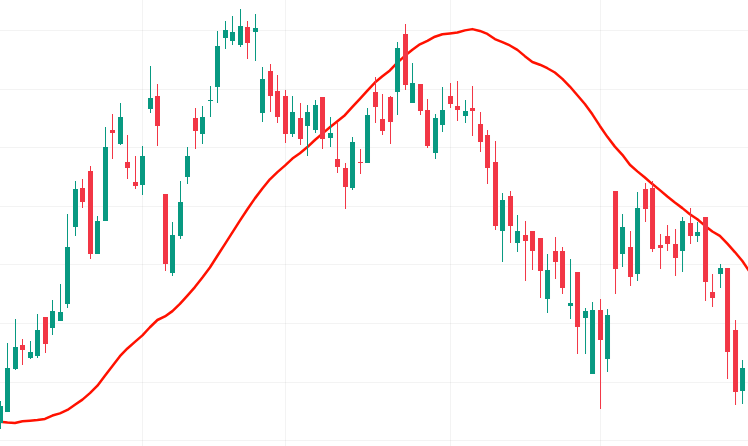
Structure of the ZLMA Indicator
The ZLMA is calculated using:
- Base Moving Average → Typically an EMA (Exponential Moving Average).
- Lag Adjustment Factor → A correction applied to reduce the delay inherent in moving averages.
- Final Line → A smoother, more responsive moving average plotted on the chart.
This structure ensures ZLMA reacts faster to price movements compared to SMA or EMA, while still maintaining stability.
Key Features
- Reduced Lag: Provides quicker signals than traditional moving averages.
- Smoothness: Filters out noise without sacrificing responsiveness.
- Trend Sensitivity: Captures short-term momentum while confirming long-term trends.
- Versatility: Works across multiple timeframes and asset classes.
- Crossover Signals: ZLMA crossovers with price or other averages generate buy/sell triggers.
How It Helps Traders
- Trend Identification: Confirms bullish or bearish momentum with minimal delay.
- Entry & Exit Points: Provides disciplined trade timing through faster crossovers.
- Risk Management: Reduces the risk of late entries compared to SMA or EMA.
- Reversal Detection: Helps spot weakening momentum when price diverges from ZLMA.
- Strategy Integration: Works well with RSI, MACD, or Bollinger Bands for layered confirmation
Conclusion
The Zero Lag Moving Average is a powerful enhancement of traditional moving averages, offering traders a more responsive view of price trends by minimizing lag. Its ability to filter noise while capturing momentum makes it valuable for both intraday and swing traders. While ZLMA should not be used in isolation, combining it with momentum or volatility-based indicators enhances accuracy and confidence. For traders seeking a disciplined, trend-sensitive approach to market analysis, the ZLMA Indicator provides a reliable framework to navigate bullish and bearish markets effectively.
