

Introduction
The Weighted Moving Average (WMA) Indicator is a type of moving average that assigns greater importance to recent price data compared to older values. Unlike the Simple Moving Average (SMA), which treats all data points equally, WMA applies a weighting factor that decreases linearly over time. This makes WMA more responsive to recent price changes, helping traders capture short-term momentum while still smoothing out noise.
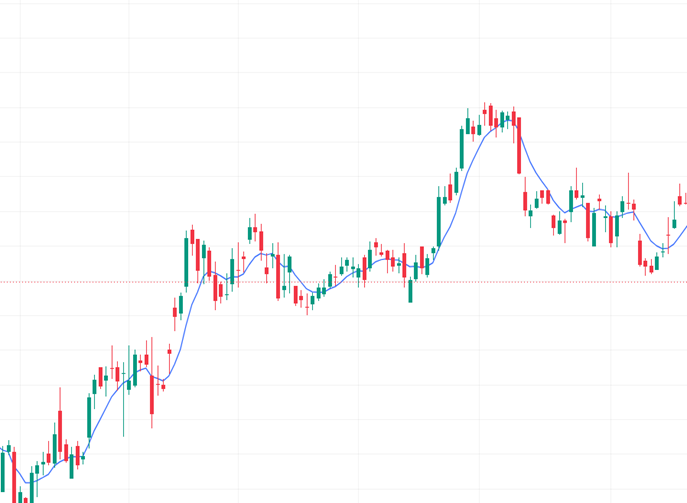
Structure of the WMA Indicator
The WMA is calculated using the formula:
WMA=∑(Pricet×Weightt)/∑Weights
Where:
- Price_t → Closing price at time t.
- Weight_t → Assigned weight, with the most recent data given the highest value.
- Sum of Weights → Ensures normalization of the average.
For example, in a 5-period WMA, the most recent price is multiplied by 5, the previous by 4, and so on, before dividing by the sum of weights (15).
Key Features
- Weighted Calculation: Recent prices have stronger influence.
- Trend Sensitivity: More responsive than SMA, less lagging than EMA.
- Noise Reduction: Smooths price data while emphasizing current momentum.
- Versatility: Works across multiple timeframes and asset classes.
- Crossover Signals: WMA crossovers with price or other averages generate buy/sell triggers.
How It Helps Traders
- Trend Identification: Confirms bullish or bearish momentum with greater sensitivity.
- Entry & Exit Points: Crossovers between price and WMA provide disciplined trade signals.
- Risk Management: Reduces lag compared to SMA, helping avoid late entries.
- Reversal Detection: Helps spot weakening momentum when price diverges from WMA.
- Strategy Integration: Works well with RSI, MACD, or Bollinger Bands for layered confirmation.
Conclusion
The Weighted Moving Average is a refined version of traditional moving averages, offering traders a more responsive view of price trends by emphasizing recent data. Its ability to filter noise while capturing short-term momentum makes it valuable for both intraday and swing traders. While WMA should not be used in isolation, combining it with momentum or volatility-based indicators enhances accuracy and confidence. For traders seeking a disciplined, trend-sensitive approach to market analysis, the WMA Indicator provides a reliable framework to navigate bullish and bearish markets effectively.
