

Introduction
The Ulcer Index Indicator is a volatility and risk measurement tool developed by Peter Martin in the 1980s. Unlike traditional volatility measures such as standard deviation, the Ulcer Index focuses specifically on downside risk by quantifying the depth and duration of price declines from recent highs. It was originally designed for mutual fund performance evaluation but has since become a valuable tool for traders and portfolio managers who want to assess drawdown risk and market stress.
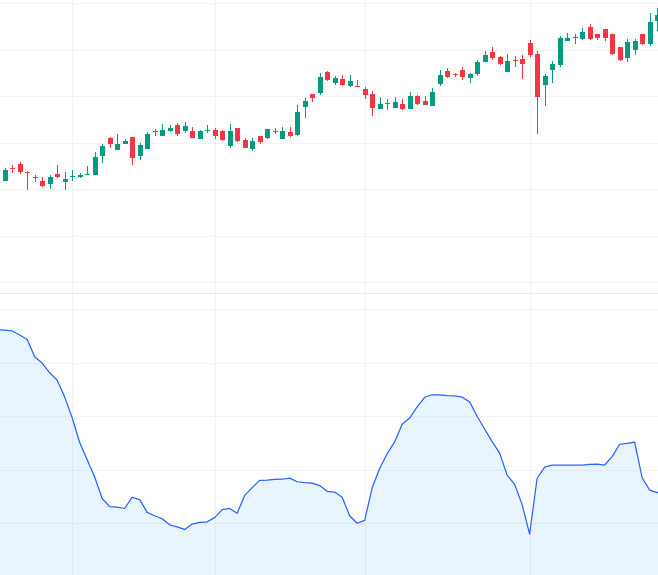
Structure of the Ulcer Index Indicator
The Ulcer Index is calculated in three steps:
- Drawdown Calculation → Measure the percentage decline of price from its most recent peak.
- Squared Drawdown → Square the drawdown values to emphasize larger declines.
- Average of Squared Drawdowns → Take the mean of squared values over a chosen period, then compute the square root.
Ulcer Index=∑(Drawdown2)n
Where n is the number of periods.
This structure ensures the indicator highlights prolonged and deep declines rather than short-term fluctuations.
Key Features
- Downside-Focused: Measures risk based on drawdowns, not overall volatility.
- Risk Sensitivity: Larger and longer declines weigh more heavily.
- Portfolio Evaluation: Useful for comparing funds or strategies with similar returns but different risk levels.
- Noise Reduction: Ignores minor fluctuations, focusing on meaningful declines.
- Versatility: Works across equities, indices, and mutual funds.
How It Helps Traders
- Risk Management: Identifies assets with lower downside risk, aiding safer portfolio construction.
- Performance Evaluation: Helps compare investments beyond returns by factoring in drawdown stress.
- Trend Confirmation: Low Ulcer Index values often align with stable uptrends.
- Reversal Detection: Rising Ulcer Index signals increasing downside pressure.
- Strategy Integration: Works well with Sharpe Ratio or other risk-adjusted performance metrics.
Conclusion
The Ulcer Index Indicator is a specialized risk tool that focuses on downside volatility, making it particularly valuable for traders and investors concerned with capital preservation. By measuring the depth and duration of drawdowns, it provides a more realistic picture of investment risk than traditional volatility measures. While it should not be used in isolation, combining the Ulcer Index with momentum or return-based indicators enhances portfolio evaluation and trading confidence. For traders seeking a disciplined, risk-aware approach to market analysis, the Ulcer Index Indicator offers a reliable framework to navigate bullish and bearish markets effectively.
