

Introduction
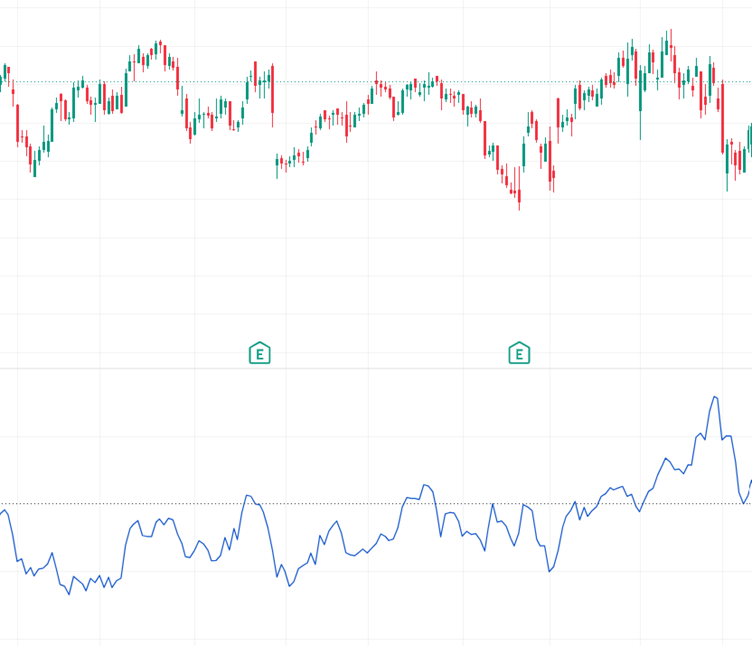
Technical Analysis Relative Strength is a momentum-based trading indicator designed to measure how strongly one asset performs compared to another asset, benchmark index, or the overall market. In trading platforms, the term “Relative Strength” does not simply refer to price movement alone; instead, it evaluates whether a stock, currency pair, cryptocurrency, or commodity is outperforming or underperforming another instrument over a specified period.
For example, if a trader compares a technology stock with a benchmark index and the indicator rises steadily, it means the stock is performing better than the market. Professional traders frequently use Relative Strength indicators to identify leadership stocks during bullish phases and weak assets during bearish conditions.
Unlike oscillators that only focus on overbought or oversold conditions, Relative Strength concentrates on comparative performance. This makes it extremely useful for portfolio rotation strategies, sector analysis, and trend-following systems. Institutional traders and hedge funds often rely on relative strength concepts to allocate capital into stronger-performing sectors.
The indicator becomes especially valuable during uncertain market conditions because it helps traders avoid weak-performing instruments and focus on assets showing resilience. In momentum investing, the principle is simple: stronger assets tend to continue performing strongly for a period.
Structure
The Relative Strength indicator is generally structured around the comparison of two price series:
- Primary asset price
- Benchmark asset price
The calculation often follows this ratio:
RS = {Price of Asset}{Price of Benchmark}
If the ratio rises:
- The asset is outperforming the benchmark.
If the ratio falls:
- The asset is underperforming.
Most trading platforms smooth the output using moving averages or interpolation techniques to reduce noise and improve readability. Some advanced versions also include:
- Trend smoothing
- Signal lines
- Color-coded momentum zones
- Divergence detection
Features
1. Comparative Market Analysis
The indicator helps traders compare assets against indexes, sectors, or currencies.
2. Trend Confirmation
A rising relative strength line confirms bullish market leadership.
3. Sector Rotation Identification
Traders can identify which sectors attract institutional money flow.
4. Noise Reduction
Interpolation methods reduce erratic market fluctuations.
5. Multi-Timeframe Compatibility
It can be used in intraday, swing trading, and long-term investing.
6. Divergence Detection
When price rises but relative strength weakens, trend reversals may occur.
How It Helps Traders
Relative Strength assists traders in filtering market opportunities. Instead of buying every rising stock, traders can focus only on the strongest-performing assets. This increases probability because strong momentum often attracts further institutional participation. Swing traders use the indicator to identify breakout stocks outperforming the market. Position traders rely on it for long-term portfolio management. Day traders may use short-term relative strength to identify intraday leaders. The indicator also helps reduce emotional trading. Rather than making decisions based on news or speculation, traders can rely on measurable comparative performance. In bearish markets, the indicator can identify assets that decline less aggressively than the market. Such resilience often signals future leaders when the market recovers.
Conclusion
Relative Strength is a highly valuable indicator for traders seeking market leadership, momentum confirmation, and comparative analysis. Its ability to measure outperforming assets makes it a favorite among institutional and retail traders alike. By helping traders focus on stronger opportunities while avoiding weaker instruments, the indicator improves decision-making and enhances strategic trading performance. When combined with proper risk management and trend analysis, Relative Strength can become a powerful component of a professional trading system.
