

Introduction
Technical Analysis Squeeze LZ is a volatility-compression indicator inspired by the popular “Squeeze” trading concept that combines volatility contraction and momentum expansion. The term “LZ” often refers to a low-volatility or squeeze zone where market activity becomes compressed before a potential breakout occurs. Traders use this indicator to identify periods when the market is storing energy and preparing for a significant move.
Financial markets alternate between low-volatility consolidation phases and high-volatility expansion phases. During consolidation, price movement becomes narrow and less directional. Eventually, this compression ends with strong breakouts or breakdowns. Squeeze LZ helps traders identify these transitions early.
The interpolation enhancement improves smoothness and reduces erratic fluctuations, allowing traders to visualize squeeze conditions more clearly. The indicator is highly useful in forex, stocks, indices, commodities, and cryptocurrencies.
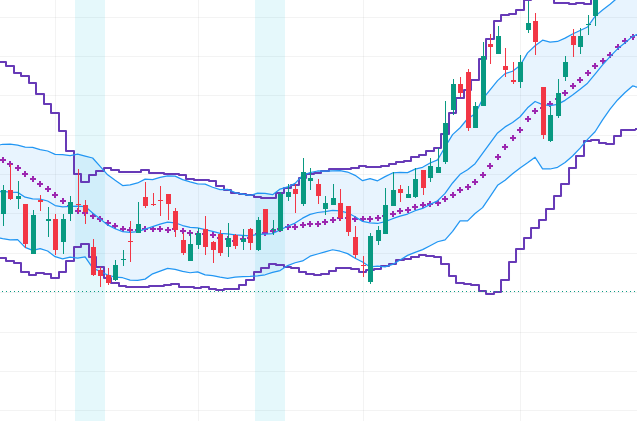
Structure
Squeeze indicators are commonly based on the relationship between:
- Bollinger Bands
- Keltner Channel
A squeeze occurs when:
- Bollinger Bands move inside the Keltner Channel.
Conceptually:
Squeeze Condition = BollingerBands subsets Keltner Channel
Interpolation smooths squeeze transitions and momentum shifts.
Features
1. Volatility Compression Detection
Identifies periods of low market activity.
2. Breakout Anticipation
Signals possible explosive price movement.
3. Noise Reduction
Interpolation improves signal clarity.
4. Momentum Preparation
Helps traders prepare before major moves occur.
5. Multi-Market Compatibility
Works across all major asset classes.
6. Trend Expansion Analysis
Useful for identifying trend acceleration.
How It Helps Traders
Squeeze LZ helps traders avoid entering trades during random consolidation and instead focus on breakout opportunities. When the market enters a squeeze phase, volatility contracts significantly, indicating potential energy buildup.
Traders monitor the release of the squeeze to identify strong directional opportunities. A bullish breakout after a squeeze may signal aggressive buying momentum, while a bearish release may indicate heavy selling pressure.
The interpolation enhancement helps reduce false squeeze signals caused by temporary volatility fluctuations. This improves trader confidence and decision-making.
Swing traders and breakout traders especially benefit from this indicator because it helps them anticipate large market movements before they happen.
Conclusion
Squeeze LZ is a powerful volatility-compression indicator that helps traders identify low-volatility environments before explosive price movements occur. Its ability to combine squeeze analysis with interpolation smoothing creates cleaner and more dependable signals. By helping traders focus on high-potential breakout opportunities, Squeeze LZ becomes an essential tool for momentum and trend traders.
