

Introduction
Technical Analysis Symmetrically Weighted Moving Average stands for Symmetrically Weighted Moving Average with interpolation enhancements. It is designed to smooth price action while maintaining balanced responsiveness.
Unlike simple moving averages, SWMA applies symmetrical weighting to price data.
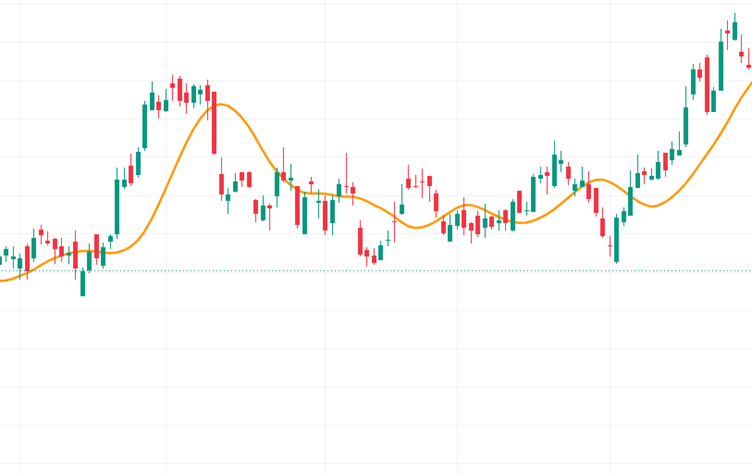
Structure
Conceptually:
SWMA=∑Pricei×Weighti∑Weighti
Weights are distributed symmetrically around the center.
Features
Balanced Smoothing Reduces market noise effectively, producing a cleaner price curve that helps traders focus on meaningful movements rather than random fluctuations.
Reduced Lag More responsive than standard moving averages, allowing traders to react faster to price changes without sacrificing accuracy.
Symmetrical Weighting Applies equal emphasis across data points, improving trend consistency and reducing bias toward recent or older prices.
Trend‑Following Utility Designed for directional analysis, it helps traders stay aligned with prevailing market trends and avoid counter‑trend traps.
Noise Filtering Interpolation techniques enhance smoothness, ensuring signals remain reliable even in volatile conditions.
Multi‑Market Application Versatile enough to work across equities, forex, commodities, and indices, making it a flexible tool for diverse trading strategies.
How It Helps Traders
Symmetrically Weighted Moving Average helps traders identify trends with smoother and more balanced price representation. It reduces emotional reactions caused by random volatility.
Conclusion
Symmetrically Weighted Moving Average is a sophisticated moving average that combines symmetrical weighting with interpolation smoothing for cleaner trend analysis and improved market clarity.
