

Bearish Breakaway
The Bearish Breakaway is a five-candle formation that appears at the top of an uptrend. It begins with strong bullish activity but gradually shifts toward bearish control, ending with a decisive downward move.
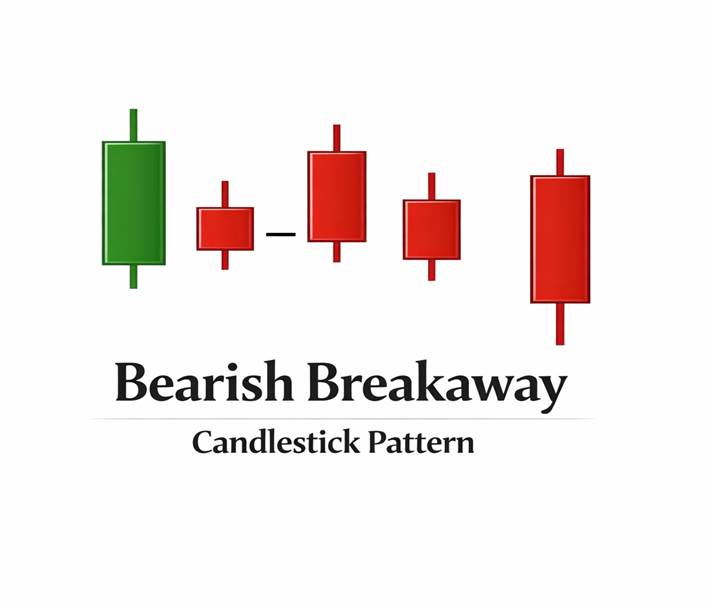
Candle Formation Breakdown
- First Candle: A long bullish candle continuing the uptrend.
- Second Candle: Another bullish candle that gaps up, reinforcing optimism.
- Third Candle: A smaller bullish candle, showing reduced momentum.
- Fourth Candle: A bearish candle that begins to challenge the trend.
- Fifth Candle: A strong bearish candle closing well into the body of the first candle, confirming reversal.
Key Traits to Recognize
- Appears after a prolonged rally.
- The first three candles show bullish enthusiasm.
- The fourth and fifth candles mark the shift to bearish sentiment.
- Stronger when accompanied by high trading volume.
Market Psychology Behind the Pattern
- Early Stage: Buyers dominate, pushing prices higher.
- Middle Stage: Momentum weakens, as smaller bullish candles appear.
- Final Stage: Sellers take control, driving prices down sharply.
- Interpretation: A gradual but decisive transition from bullish optimism to bearish dominance.
Trading Strategy Considerations
- Confirmation Needed: Traders wait for the fifth candle to close decisively lower.
- Entry Point: Short positions are considered after confirmation.
- Stop-Loss Placement: Commonly set above the high of the second candle.
- Best Context: Works best near resistance zones or after extended rallies.
Limitations to Keep in Mind
- The Bearish Breakaway is rare and may not appear often in liquid markets.
- Without confirmation, it may indicate only consolidation.
- Should be combined with other indicators (RSI, MACD, moving averages, or volume analysis).
Final Thoughts
The Bearish Breakaway candlestick pattern is a rare but powerful bearish reversal signal. Recognizing it at the top of an uptrend can help traders anticipate downturns and adjust their strategies with confidence.
