

Bearish Hikkake
The Bearish Hikkake is a short-term pattern that begins with an inside bar (a candle fully contained within the prior candle’s range) followed by a false breakout to the upside. The market then reverses downward, trapping buyers and rewarding sellers.
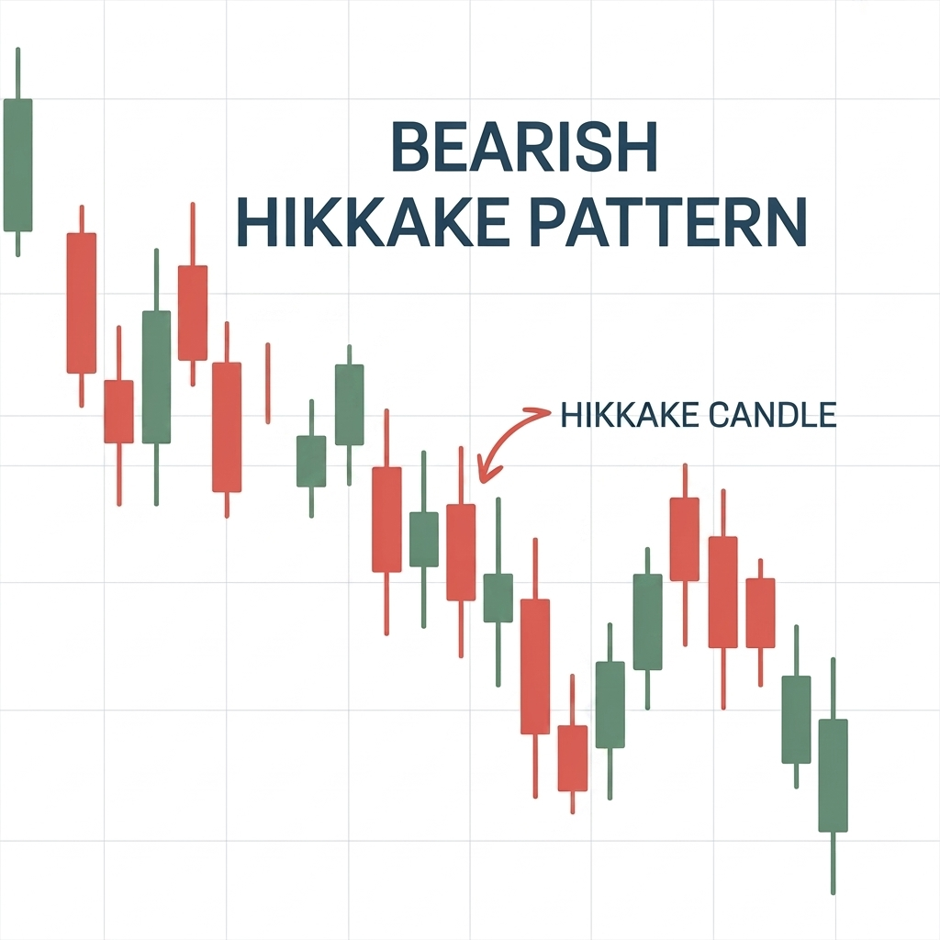
Candle Formation Breakdown
- First Candle: A large candle setting the range.
- Second Candle: An inside bar (smaller candle within the first candle’s high-low range).
- Third Candle: A bullish breakout candle that closes above the inside bar’s high.
- Fourth Candle (and beyond): Price reverses downward, closing below the inside bar’s low, confirming the bearish Hikkake.
Key Traits to Recognize
- Begins with an inside bar setup.
- False upside breakout traps buyers.
- Confirmation occurs when price closes below the inside bar’s low.
- Stronger when accompanied by high trading volume.
Market Psychology Behind the Pattern
- Buyers believe the upside breakout signals continuation higher.
- Sellers step in, reversing the move and forcing buyers to exit.
- This “trap” creates strong downward momentum, often leading to a short-term decline.
Strategy Considerations
- Entry Point: Short positions are considered once price closes below the inside bar’s low.
- Stop-Loss Placement: Commonly set above the false breakout candle’s high.
- Targets: Nearest support levels or a risk-reward ratio (e.g., 2:1).
- Best Context: Works well in trending markets or near resistance zones.
Limitations to Keep in Mind
- The Bearish Hikkake is a short-term pattern; it may not signal long-term reversals.
- Without confirmation, the false breakout may continue upward.
- Should be combined with other indicators (RSI, MACD, moving averages) for stronger signals.
Final Thoughts
The Bearish Hikkake candlestick pattern is a clever setup that traps buyers and rewards sellers. Recognizing it after an inside bar formation can help traders anticipate sharp downward moves and position themselves early.
