

Downside Gap Three Method
The Downside Gap Three Method is a three-candle bearish continuation pattern. It occurs when two bearish candles form a downward gap, followed by a small bullish candle that remains trapped within the gap.
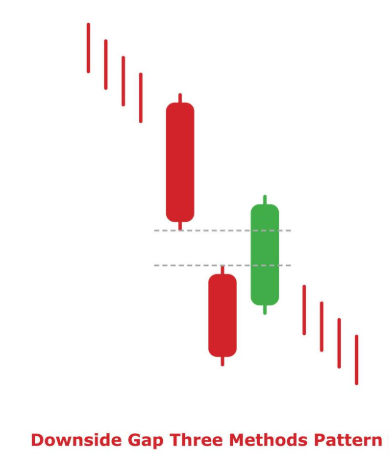
Candle Formation Breakdown
- First Candle: A bearish candle continuing the downtrend.
- Second Candle: Another bearish candle that opens with a downward gap and closes lower.
- Third Candle: A small bullish candle that opens within the gap and closes inside the gap range, failing to close it.
Key Traits to Recognize
- Appears during a downtrend.
- The second candle creates a downward gap.
- The third candle is bullish but weak, trapped inside the gap.
- Signals that sellers remain in control despite a brief bullish attempt.
Market Psychology Behind the Pattern
- Sellers dominate the trend, creating a gap down.
- Buyers attempt recovery with a small bullish candle.
- The bullish move fails to close the gap, showing lack of strength.
- Sellers interpret this as confirmation of bearish continuation.
Limitations to Keep in Mind
- The Downside Gap Three Method is rare due to its precise gap and alignment requirements.
- Without confirmation, it may represent only short-term consolidation.
- Should be combined with other indicators (RSI, MACD, moving averages) for stronger signals.
Final Thoughts
The Downside Gap Three Method candlestick pattern is a deceptive setup: although the third candle is bullish, its inability to close the gap makes it a bearish continuation signal. Recognizing it helps traders avoid false optimism and stay aligned with the dominant market direction.
