

Introduction
In technical analysis, traders rely on indicators to interpret market trends, momentum, and potential reversals. Among these, the Bias Indicator plays a unique role by helping traders identify the prevailing market sentiment—whether bullish, bearish, or neutral. Unlike oscillators that measure overbought or oversold conditions, the Bias Indicator focuses on directional tendencies, giving traders a structured view of market bias.
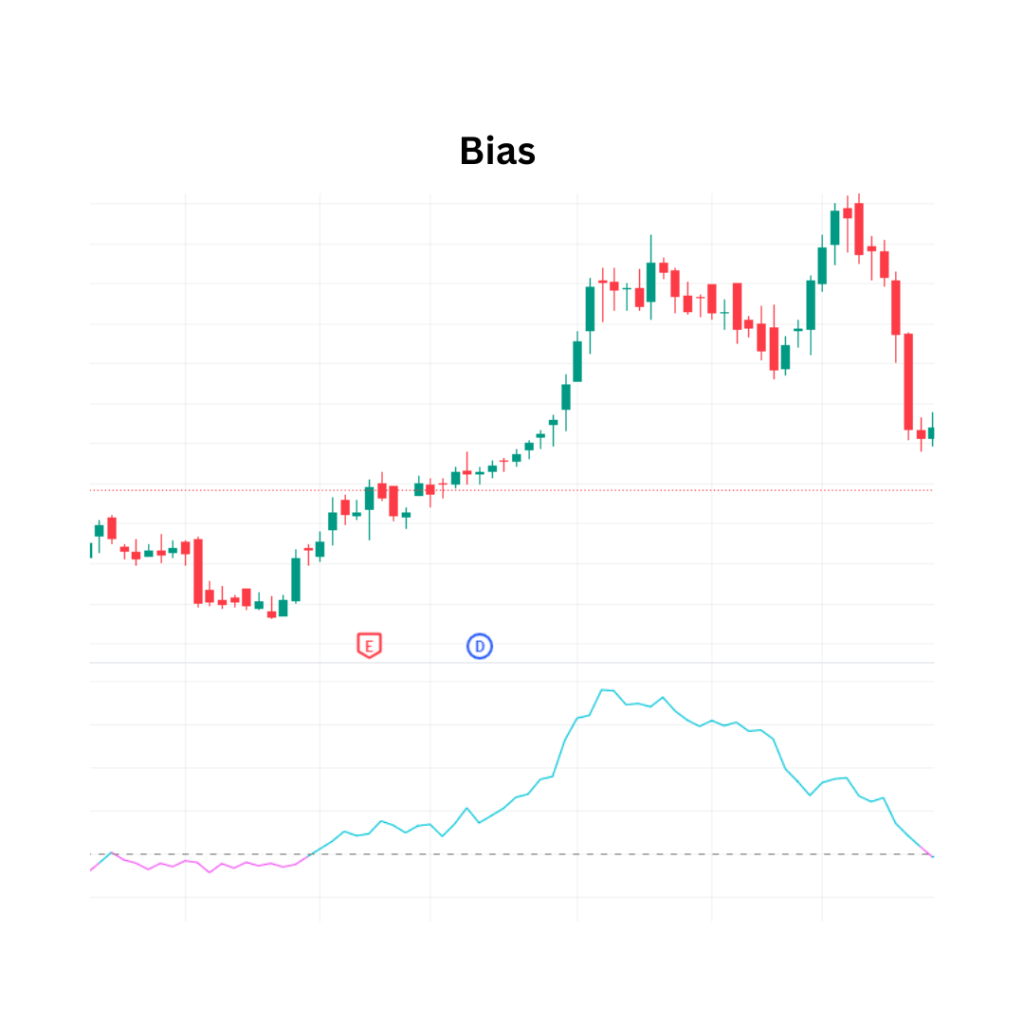
Structure of the Bias Indicator
The Bias Indicator is typically built on:
- Price averages: It compares short-term and long-term moving averages to detect directional strength.
- Trend filters: It incorporates volatility and momentum checks to avoid false signals.
- Signal zones: Bias is often categorized into three zones—positive (bullish), negative (bearish), and neutral (sideways).
This structured approach allows traders to quickly assess whether the market favors long positions, short positions, or caution.
Key Features
- Directional clarity: Highlights whether the market is trending upward, downward, or consolidating.
- Adaptability: Works across multiple timeframes, from intraday charts to long-term investments.
- Risk management: Helps traders avoid trading against the dominant bias.
- Integration: Can be combined with other indicators like RSI, MACD, or Bollinger Bands for confirmation.
How It Helps Traders
- Trend Identification: Traders can align their strategies with the prevailing bias, reducing the risk of counter-trend trades.
- Entry & Exit Timing: A positive bias supports long entries, while a negative bias signals short opportunities. Neutral bias suggests waiting for clearer signals.
- Portfolio Positioning: Investors can adjust exposure—heavier allocation in bullish bias, defensive stance in bearish bias.
- Psychological Discipline: By following bias signals, traders avoid emotional decisions and stick to structured strategies.
Conclusion
The Bias Indicator is not a standalone magic tool but a guiding compass in trading. It simplifies decision-making by clarifying market sentiment and aligning trades with the dominant direction. When used alongside complementary indicators, it enhances accuracy, minimizes risk, and strengthens trading discipline. For traders seeking consistency, the Bias Indicator serves as a reliable framework to navigate momentum, range-bound, and volatile markets with confidence.
