

The Inertia Indicator is a momentum-based technical analysis tool that measures the persistence of price movement in a given direction. It is designed to capture the “inertia” of the market—just as physical objects tend to continue moving unless acted upon, price trends often sustain themselves until disrupted by external forces. Traders use the Inertia Indicator to identify strong, ongoing trends and anticipate potential reversals when momentum begins to weaken.
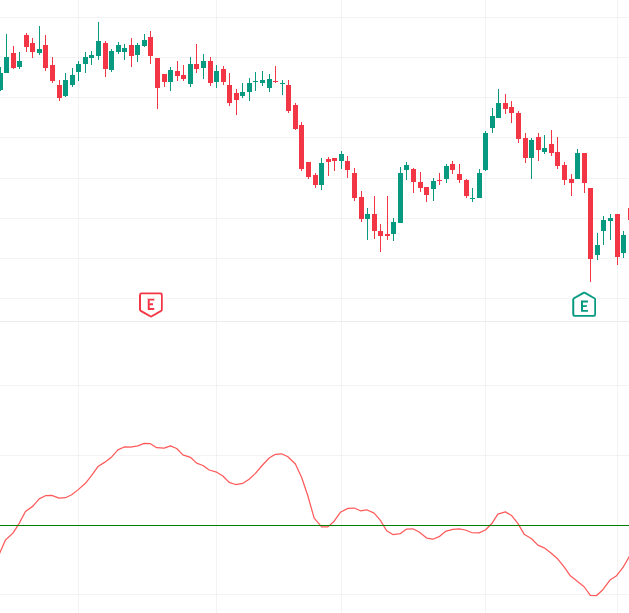
Structure of the Inertia Indicator
The Inertia Indicator is typically constructed using:
- Price Inputs: Closing prices over a defined period.
- Momentum Calculation: Derived from rate-of-change or smoothed momentum values.
- Smoothing Mechanism: Often incorporates moving averages to filter noise.
- Signal Line: A threshold or zero line that distinguishes bullish from bearish inertia.
Interpretation:
- Positive Inertia → Market momentum is strong and bullish.
- Negative Inertia → Market momentum is weak or bearish.
- Crossovers → Shifts from positive to negative (or vice versa) signal potential reversals.
Key Features
- Trend Persistence Measurement: Captures the strength and sustainability of price moves.
- Noise Reduction: Smooths out short-term fluctuations for clearer signals.
- Versatility: Works across multiple timeframes and asset classes.
- Crossover Signals: Provides straightforward buy/sell triggers.
- Integration Friendly: Can be paired with oscillators like RSI or MACD for confirmation.
How It Helps Traders
- Trend Identification: Highlights whether momentum is sustaining or fading.
- Entry & Exit Points: Provides disciplined signals when inertia shifts direction.
- Risk Management: Helps avoid false entries by requiring sustained momentum.
- Reversal Detection: Identifies weakening trends before price fully reverses.
- Strategy Integration: Works well with breakout strategies, moving averages, or volume indicators.
Conclusion
The Inertia Indicator is a powerful momentum tool that helps traders measure the persistence of price trends. By focusing on sustained movement rather than short-term fluctuations, it reduces noise and enhances accuracy. While it should not be used in isolation, combining Inertia with trend-following or volume-based indicators strengthens reliability. For traders seeking to capture strong trends and anticipate reversals with confidence, the Inertia Indicator offers a structured framework to navigate bullish and bearish markets effectively.
