

On-Neck Pattern
The On-Neck Pattern is a two-candle bearish continuation pattern. It occurs when a strong bearish candle is followed by a bullish candle that opens lower but closes near the low of the first candle, failing to reverse momentum.
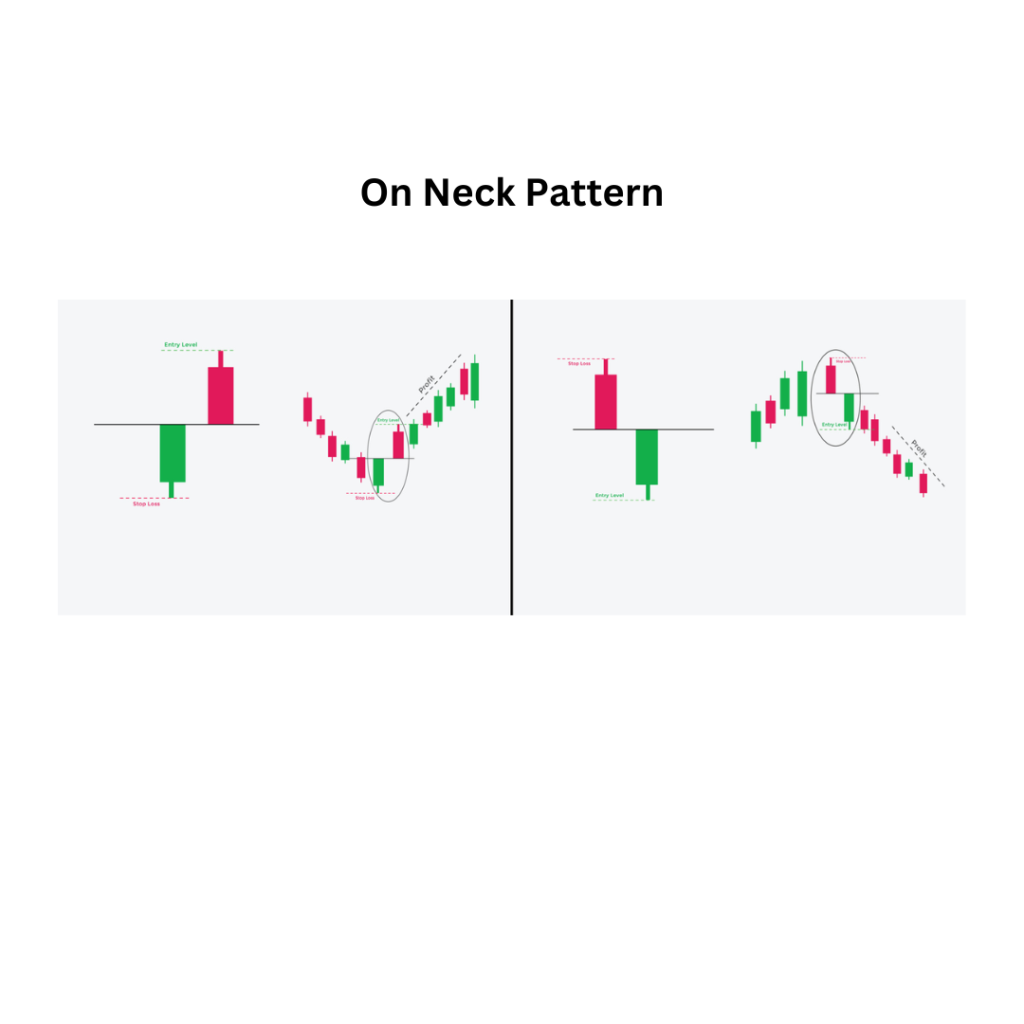
Candle Formation Breakdown
- First Candle: A long bearish candle, confirming strong selling pressure.
- Second Candle: A bullish candle that opens with a downward gap and closes near the low of the first candle, but not above it.
Key Traits to Recognize
- Appears during a downtrend.
- The second candle is bullish but weak, closing near the prior low.
- The close at the same level signals sellers remain in control.
- Stronger when confirmed by continued bearish candles afterward.
Market Psychology Behind the Pattern
- Sellers dominate initially with a strong bearish move.
- Buyers attempt recovery with a bullish candle.
- The bullish close near the prior low shows lack of strength.
- Interpretation: Sellers remain in control, and the downtrend is likely to continue.
Trading Strategy Considerations
- Entry Point: Short positions are considered after the second candle fails to close above the first candle’s low.
- Stop-Loss Placement: Commonly set above the high of the second candle.
- Targets: Nearest support levels or a risk-reward ratio (e.g., 2:1).
- Best Context: Works best in strong downtrends with gaps confirming bearish sentiment.
Limitations to Keep in Mind
- The On-Neck Pattern is rare due to its precise gap and closing requirements.
- Without confirmation, it may represent only short-term consolidation.
- Should be combined with other indicators (RSI, MACD, moving averages) for stronger signals.
Final Thoughts
The On-Neck candlestick pattern is a subtle but powerful bearish continuation signal. Recognizing it during a downtrend helps traders avoid false rallies and stay aligned with the dominant market direction.
