

What Is the Three Outside Down Pattern?
The Three Outside Down is a three-candle bearish reversal pattern. It begins with a bullish candle, followed by a strong bearish engulfing candle, and is confirmed by a third bearish candle closing lower.
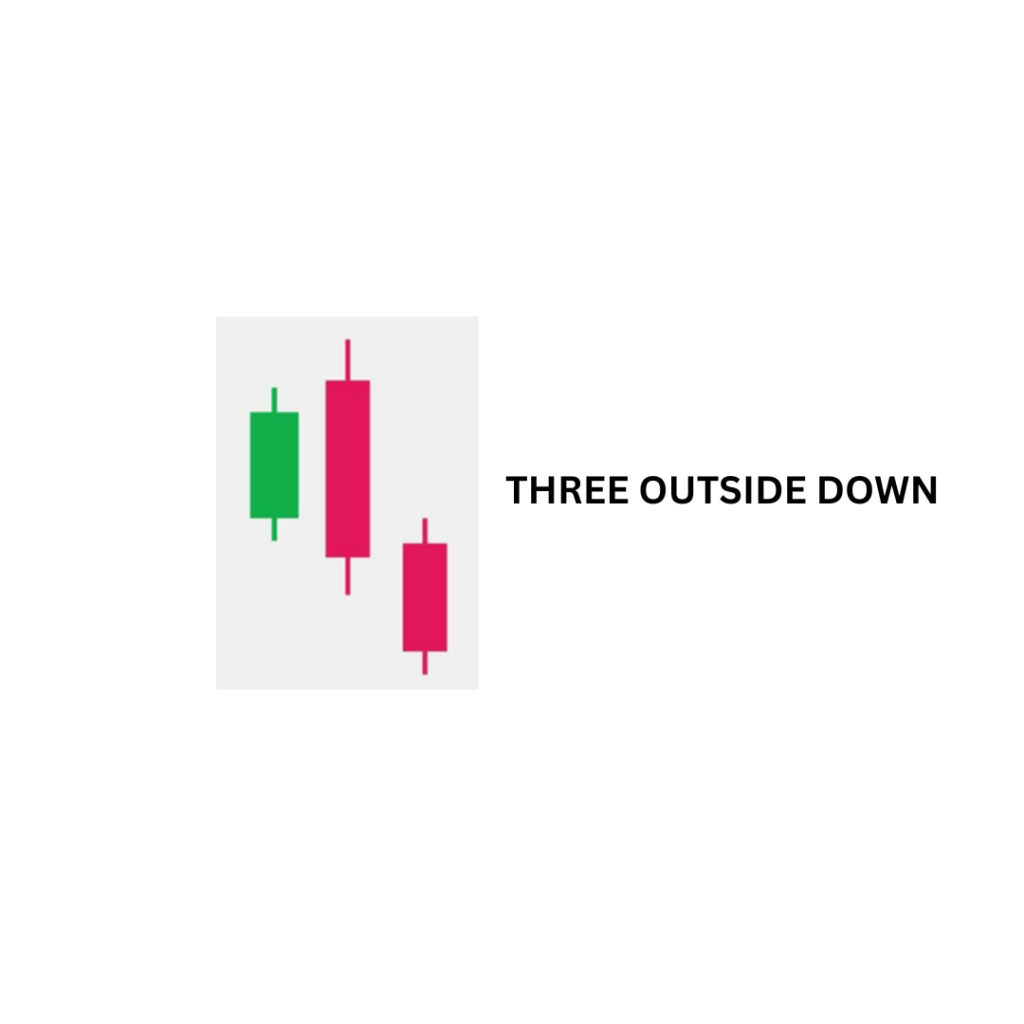
Candle Formation Breakdown
- First Candle: A long bullish candle, continuing the uptrend.
- Second Candle: A long bearish candle that opens higher and closes below the first candle’s low, fully engulfing it.
- Third Candle: Another bearish candle that closes lower, confirming the reversal.
Key Traits to Recognize
- Appears after a strong uptrend.
- The second candle is a bearish engulfing of the first.
- The third candle confirms reversal by closing lower.
- Stronger when accompanied by high trading volume on the second and third candles.
Market Psychology Behind the Pattern
- Buyers dominate initially, driving prices higher.
- Sellers step in with a strong bearish engulfing candle, overwhelming buyers.
- Continued selling pressure on the third candle confirms that sellers have taken control.
- Interpretation: A clear bearish reversal signal.
Trading Strategy Considerations
- Entry Point: Short positions are considered after the third bearish candle closes lower.
- Stop-Loss Placement: Commonly set above the high of the second candle.
- Targets: Nearest support levels or a risk-reward ratio (e.g., 2:1).
- Best Context: Works best after extended rallies, signaling exhaustion of bullish momentum.
Limitations to Keep in Mind
- The Three Outside Down requires precise alignment of three candles.
- Without confirmation, the second candle alone may mislead traders into expecting reversal prematurely.
- Should be combined with other indicators (RSI, MACD, moving averages) for stronger signals.
Final Thoughts
The Three Outside Down candlestick pattern is a reliable bearish reversal signal. Recognizing it after an uptrend helps traders anticipate downturns and adjust their strategies effectively.
