

Introduction
The Price–Volume Trend is a cumulative indicator that blends price changes with trading volume to measure the strength of trends. It is similar to On‑Balance Volume (OBV) but more refined, as it adjusts volume proportionally to the percentage change in price. This makes PVT more sensitive to both minor and major moves, offering traders a nuanced view of market conviction.
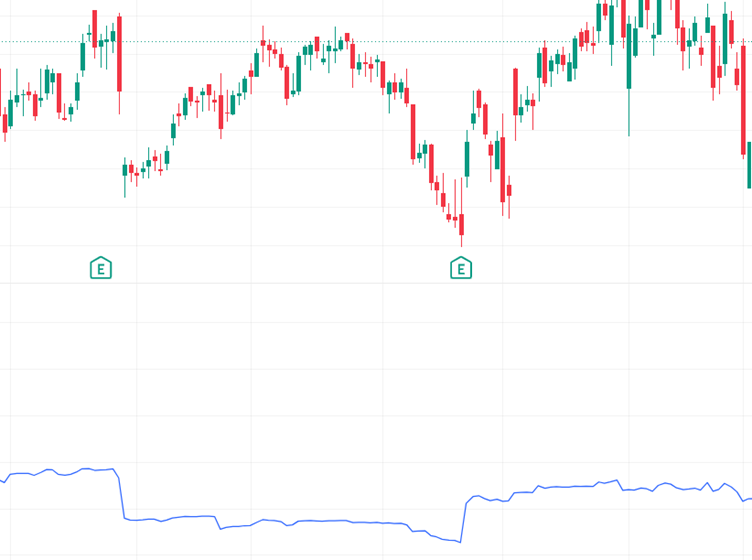
Structure
The formula is:
[ PVT_t = PVT_{t-1} +{Close_t – Close_{t-1}}{Close_{t-1} Volume_t ]
Unlike OBV, which adds or subtracts the entire day’s volume based on direction, PVT scales the adjustment according to the magnitude of price change. This cumulative calculation produces a line that rises when price increases are backed by volume and falls when declines occur with selling pressure.
Features
- Integrates both price percentage change and volume.
- More sensitive than OBV to small price moves.
- Can be smoothed with moving averages for clarity.
- Useful for spotting divergences between price and volume trends.
How it helps traders
PVT helps traders confirm whether price trends are genuine. For example, if price is rising but PVT is flat or declining, it suggests weak participation and possible exhaustion. Conversely, if PVT rises strongly with price, it signals healthy momentum. Traders often use PVT to confirm breakouts, identify divergences, and validate accumulation or distribution phases.
Conclusion
Price–Volume Trend is a powerful evolution of volume‑based analysis, offering a more precise measure of conviction than OBV. By scaling volume with price changes, it provides a balanced view of market strength. When combined with oscillators like RSI or MACD, PVT becomes a reliable tool for confirming sustainable trends and avoiding false signals.
