

Introduction
The Relative Strength Index (RSI) Strategy is one of the most widely used momentum oscillators in technical analysis. Developed by J. Welles Wilder, RSI measures the speed and magnitude of recent price changes to identify overbought and oversold conditions. It is plotted on a scale of 0 to 100, making it a simple yet powerful tool for spotting potential reversals, trend strength, and entry/exit points.
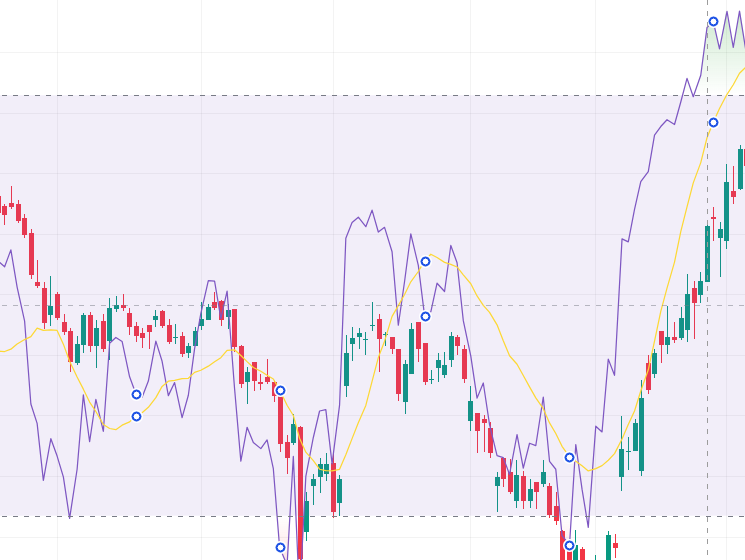
Structure of the Strategy
The RSI Strategy is built around the following components:
- RSI Formula: RSI = 100 – [100 ÷ (1 + RS)], where RS = average gain ÷ average loss over a chosen period (commonly 14 days).
- Overbought Zone: RSI above 70 suggests the asset may be overvalued and due for a pullback.
- Oversold Zone: RSI below 30 indicates undervaluation and potential upward reversal.
- Midline (50): Acts as a trend filter—above 50 signals bullish momentum, below 50 signals bearish momentum.
- Divergence Signals: When price makes new highs/lows but RSI does not, it hints at weakening momentum and possible reversal.
Key Features
- Momentum Gauge: Measures the strength of price movements.
- Overbought/Oversold Signals: Provides clear thresholds for potential reversals.
- Trend Confirmation: Midline helps validate bullish or bearish momentum.
- Versatility: Works across multiple timeframes and asset classes.
- Combination-Friendly: Often paired with MACD, moving averages, or candlestick patterns for stronger signals.
How It Helps Traders
- Identifies Market Extremes: Prevents traders from buying at tops or selling at bottoms.
- Reversal Detection: Divergences between RSI and price highlight potential turning points.
- Trend Participation: Midline analysis helps traders stay aligned with prevailing momentum.
- Risk Management: Provides rule-based entry and exit signals, reducing emotional bias.
- Scalping & Swing Trading: Effective for short-term traders who rely on momentum shifts
Conclusion
The RSI Strategy is a cornerstone of momentum trading, offering a structured way to analyze overbought and oversold conditions, trend strength, and potential reversals. Its simplicity makes it accessible to beginners, while its adaptability ensures it remains valuable for experienced traders. Although false signals can occur in volatile markets, combining RSI with other indicators like MACD or Bollinger Bands enhances reliability. For traders seeking a clear, rule-based, and versatile framework, the RSI Strategy provides a disciplined pathway to capturing profitable opportunities in dynamic markets.
