

Introduction
The Vertical Horizontal Filter (VHF) Indicator, developed by Adam White, is a technical analysis tool designed to determine whether the market is trending or ranging. Unlike oscillators that measure momentum or volatility, VHF focuses on the directional consistency of price movement. It helps traders decide whether to apply trend-following strategies (like moving averages or MACD) or range-bound strategies (like RSI or Bollinger Bands).
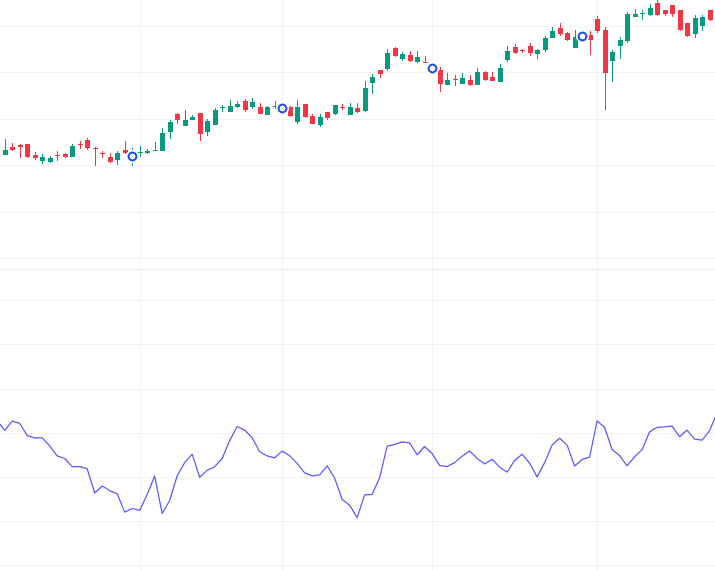
Structure of the VHF Indicator
The VHF is calculated using:
- Numerator (Vertical Movement) → The absolute difference between the highest high and lowest low over a chosen period.
- Denominator (Horizontal Movement) → The sum of absolute differences between consecutive closing prices over the same period.
Formula:
VHF=Highest High−Lowest Low∑∣Closet−Closet−1∣
- A higher VHF value indicates strong directional movement (trending market).
- A lower VHF value indicates sideways or range-bound conditions.
Key Features
- Trend vs. Range Detection: Distinguishes trending markets from consolidating ones.
- Adaptive Nature: Works across multiple timeframes and asset classes.
- Noise Reduction: Filters out minor fluctuations by focusing on directional consistency.
- Strategy Guidance: Suggests whether to use trend-following or mean-reversion strategies.
- Versatility: Useful for equities, forex, commodities, and indices.
How It Helps Traders
- Strategy Selection: Guides traders on whether to apply trend-following or range-bound systems.
- Risk Management: Prevents using the wrong strategy in unsuitable market conditions.
- Trend Confirmation: High VHF values confirm strong directional moves.
- Reversal Awareness: Falling VHF values may signal weakening trends and potential consolidation.
- Integration: Works well with moving averages, RSI, Bollinger Bands, or MACD for layered confirmation.
Conclusion
The Vertical Horizontal Filter is a unique and practical indicator that helps traders adapt their strategies to prevailing market conditions. By distinguishing between trending and range-bound phases, it reduces the risk of applying the wrong tools at the wrong time. Its simplicity and effectiveness make it valuable for both short-term and long-term traders. While VHF should not be used in isolation, combining it with momentum or volatility-based indicators enhances accuracy and confidence. For traders seeking a disciplined, adaptive approach to market analysis, the VHF Indicator provides a reliable framework to navigate bullish and bearish markets effectively.
