

Introduction
The VIDYA Indicator, developed by Tushar Chande, is a dynamic moving average that adapts to market volatility. Unlike traditional moving averages (SMA, EMA) that use fixed periods, VIDYA adjusts its smoothing factor based on market conditions. This makes it more responsive during volatile phases and steadier during quiet periods, offering traders a flexible tool for trend detection and risk management.
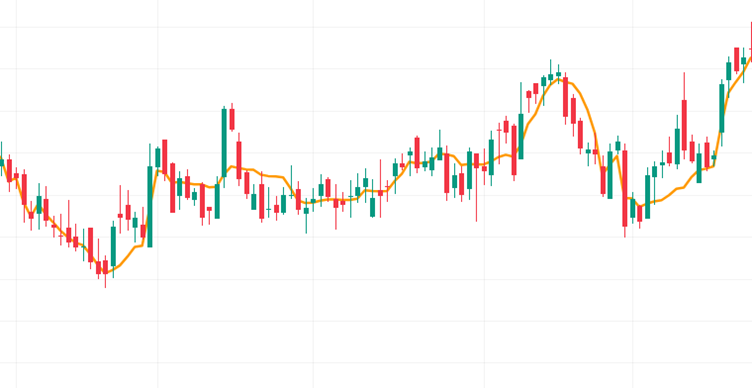
Structure of the VIDYA Indicator
The VIDYA is constructed using:
- Base Moving Average → Typically an exponential moving average (EMA).
- Volatility Index → Often derived from the Chande Momentum Oscillator (CMO) or similar measures.
- Dynamic Adjustment → The smoothing constant changes depending on volatility levels.
- High volatility → VIDYA becomes more sensitive, reacting quickly to price changes.
- Low volatility → VIDYA smooths out noise, providing stability.
This adaptive structure ensures the indicator reflects real-time market conditions rather than rigid averages.
Key Features
- Adaptive Nature: Adjusts automatically to volatility.
- Noise Reduction: Filters minor fluctuations during calm markets.
- Responsiveness: Reacts faster to price changes in volatile conditions.
- Versatility: Works across multiple timeframes and asset classes.
- Trend-Following Signals: Crossovers with price or other averages generate buy/sell triggers.
How It Helps Traders
- Trend Identification: Confirms bullish or bearish momentum with adaptive smoothing.
- Entry & Exit Points: Crossovers between price and VIDYA provide disciplined trade signals.
- Risk Management: Reduces false signals by adjusting sensitivity to volatility.
- Reversal Detection: Helps spot weakening momentum when VIDYA flattens or diverges from price.
- Strategy Integration: Works well with oscillators (RSI, MACD) or volatility tools (ATR, Bollinger Bands) for layered confirmation.
Conclusion
The VIDYA Indicator is a powerful adaptive moving average that balances responsiveness and stability by adjusting to market volatility. Its ability to filter noise during calm periods and react quickly during volatile swings makes it valuable for traders across all styles. While VIDYA should not be used in isolation, combining it with momentum or volume-based indicators enhances accuracy and confidence. For traders seeking a disciplined, volatility-aware approach to market analysis, the VIDYA Indicator provides a reliable framework to navigate bullish and bearish markets effectively.
